Aston Martin Lagonda Limited can be a British manufacturer of extravagance sports cars and grand tourers. It was founded within 1913 by Lionel Martin along with Robert Bamford.The firm became linked to luxury grand touring cars in the 1950s and 1960s, and with the fictional character James Bond following his by using a DB5 model in the 1964 film Goldfinger.The company has had a chequered financial history, including bankruptcy in this 1970s, but has also enjoyed long periods of success and stability, including under the possession of David Brown, from 1947 to 1972 and from the Ford Motor Company from 1994 to 2007.In March 2007, a consortium of people, led by David Richards, purchased 92% of Aston Martin intended for £479 million, with Ford retaining a new £40 million stake. David Richards became chairman regarding Aston Martin. In December 2012, the Italian private equity fund Investindustrialsigned a deal to obtain 37. 5% of Aston Martin, investing £150 million as being a capital increase.
Photos Aston Martin DB11 2016 from article Not the Bond Car
FoundingAston Martin was created in 1913 by Lionel Martin and Robert Bamford. The two had signed up with forces as Bamford & Martin the last year to sell cars made by Singer from premises throughout Callow Street, London where they also serviced GWK and Calthorpe cars. Martin raced specials at Aston Hill near Aston Clinton, and the pair thought we would make their own automobiles. The first car for being named Aston Martin appeared by Martin by appropriate a four-cylinder Coventry-Simplex engine on the chassis of a 1908 Isotta-Fraschini.They acquired premises in Henniker Mews in Kensington and also produced their first vehicle in March 1915. Production could not start with the outbreak of World Warfare I, and Martin joined the Admiralty and Bamford the actual Royal Army Service Corps. All machinery was sold towards the Sopwith Aviation Company.Inter war yearsAfter the war, the company was refounded from Abingdon Road, Kensington and a new car built to carry the Aston-Martin label. Bamford left in 1920 and also the company was revitalised together with funding from Count Louis Zborowski. In 1922, Bamford & Martin developed cars to compete within the French Grand Prix, which went on to line world speed and energy records at Brooklands. Three works Team Autos with 16-valve twin cam engines were built for racing and record bursting: chassis number 1914, later developed as this Green Pea; chassis number 1915, the Razor Blade history car; and chassis number 1916, later developed as the actual Halford Special.
martin dbr9 a racing car built by aston martin racing the paper model
Roughly 55 cars were built for sale in two configurations, long chassis and short chassis. The company went broke in 1924 and had been bought by Lady Charnwood, who put her son John Benson within the board. The company failed again in 1925 plus the factory closed in 1926, with Lionel Martin leaving behind.Later that year, Bill Renwick, Augustus (Bert) Bertelli and investors which included Lady Charnwood took control from the company. They renamed it Aston Martin Magnetic motors and moved it for the former Whitehead Aircraft Minimal works in Feltham. Renwick and Bertelli were being in partnership some several years and had developed a great overhead-cam four-cylinder engine using Renwick's patented combustion step design, which they had tested in an Enfield-Allday chassis. The only "Renwick and Bertelli" motor car made, it was known as "Buzzbox" nevertheless survives.The pair had planned to trade their engine to powerplant manufacturers, but having heard that the Aston Martin was don't in production realised they could capitalise on its status to jump start the production of the completely new car.Between 1926 and 1937 Bertelli has been both technical director and designer off new Aston Martins, since known as "Bertelli cars". They included the 1½-litre "T-type", "International", "Le Mans", "MKII" and its auto racing derivative, the "Ulster", and the 2-litre 15/98 as well as racing derivative, the "Speed Model". Most were open two-seater athletics cars bodied by Bert Bertelli's sibling Enrico (Harry), with a small volume of long-chassis four-seater tourers, dropheads and saloons likewise produced.Bertelli was a skilled driver keen to race his cars, one of few owner/manufacturer/drivers. The "LM" team autos were very successful in national and international powerplant racing including at Le Mans as well as the Mille Miglia.
Aston Martin Vanquish, Blue Welly 24046 1/24 scale Diecast Model
Economic problems reappeared in 1932. The company was rescued for the year by L. Prideaux Brune before passing it onto Sir Arthur Sutherland. In 1936, Aston Martin decided to target road cars, producing just 700 until eventually World War II halted work. Production shifted to aircraft components over the war.David Brown era1958 Aston Martin DB Mark IIIIn 1947, tractor manufacturer David Brown Limited bought the business under the leadership regarding managing director Sir David Brown-its "post-war saviour". The company also obtained Lagonda that year for its 2. 6-litre W. O. Bentley-designed engine. Both companies shared assets and workshops, leading to the classic "DB" compilation of cars. In 1950, the company announced the DB2, followed by the DB2/4 throughout 1953, the DB2/4 MkII with 1955, the DB Mark III in 1957 and the Italian-styled 3. 7 L DB4 inside 1958.While these models helped Aston Martin generate a good racing pedigree, the DB4 stood away and yielded the well-known DB5 in 1963. The company stayed accurate to its emerging "grand touring" style with the DB6 (1965-70), and DBS (1967-1972).The six-cylinder engines of those cars from 1954 approximately 1965 were designed by means of Tadek Marek.
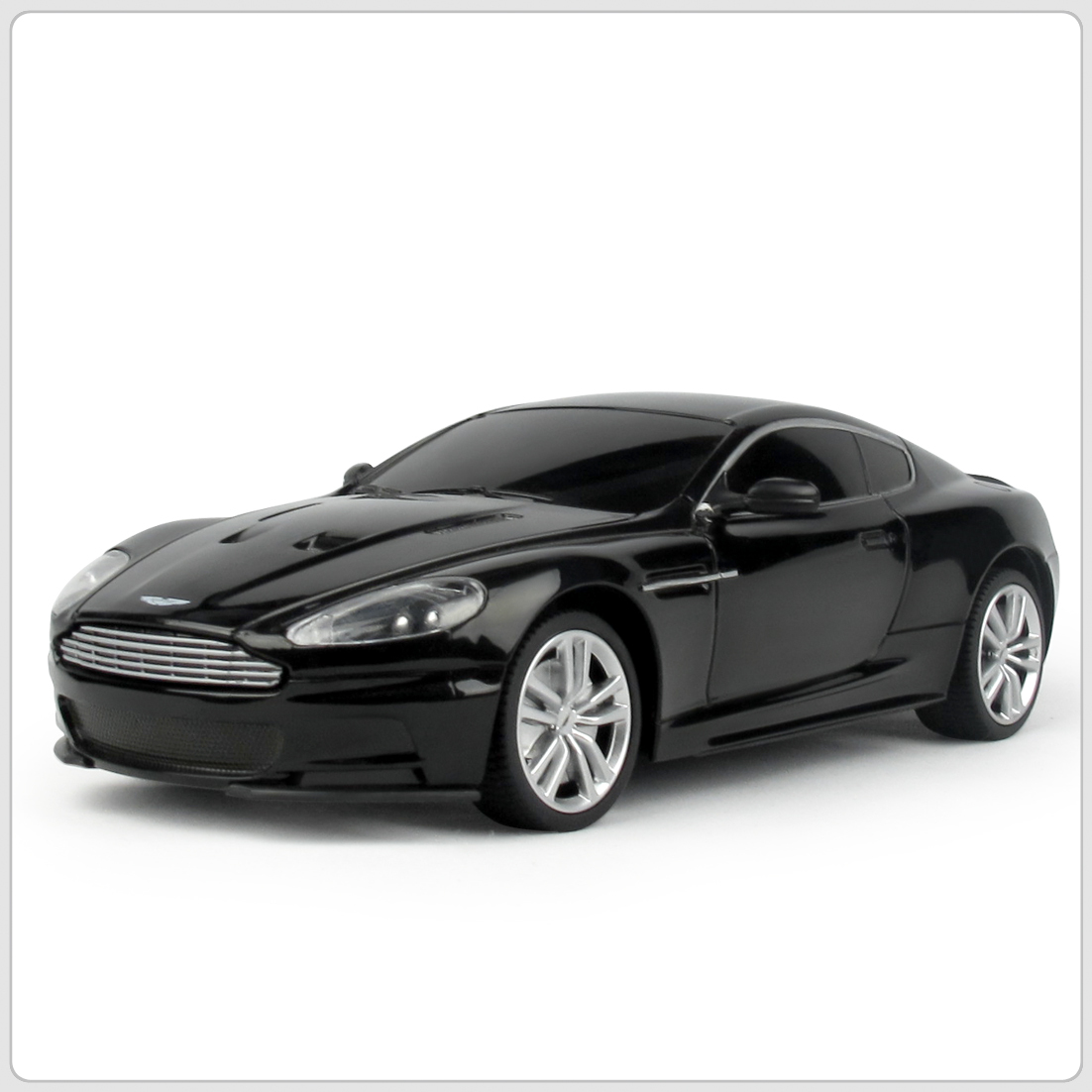
Rastar star models 1:24 Aston Martin remote control car model 40200 rc
may be governed by copyright. – Send suggestions We Comply All TakeDown by Request.
thanks for cominghttp://astonmartincarmodel.blogspot.com



No comments:
Post a Comment